
Tech Downloads
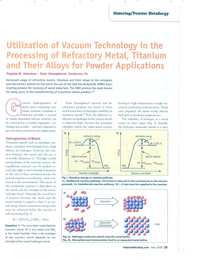
Utilization of Vacuum Technology in the Processing of Refractory Metal, Titanium and their Alloys for Powder Applications
Increased usage of refractory metals, titanium and their alloys in the aerospace and electronics industries has led to the use of the hydride/dehydride (HDH) heat treating process for recovery of spent materials. The HDH process has been known for many years in the manufacturing of transition-metal powders.
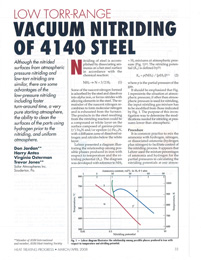
Low Torr-Range Vacuum Nitriding of 4140 Steel
Although the nitrided surfaces from atmospheric pressure nitriding and low-torr nitriding are similar, there are some advantages of the low-pressure nitriding including faster turn-around time, a very pure starting atmosphere, the ability to clean the surfaces of the parts using hydrogen prior to the nitriding, and uniform atmosphere.
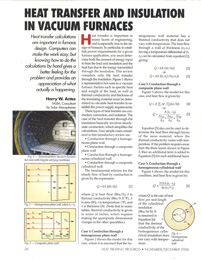
Heat Transfer and Insulation in Vacuum Furnaces
Heat transfer calculations are important in furnace design. Computers can make the work easy, but knowing how to do the calculations by hand gives a better feeling for the problem and provides an appreciation of what actually is happening.

What is Vacuum?
When we talk in terms of heat treating in vacuum, most people think we do so in a space entirely devoid of matter. In reality, this isn’t true. In practical terms then, a vacuum is a space with a highly reduced gas density.
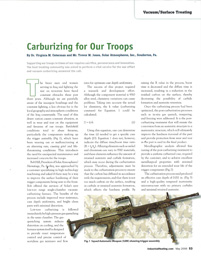
Carburizing for Our Troops
Supporting our troops in times of war requires sacrifice, perseverance and innovation. The heat treating community was asked to perform a vital service for the war effort and vacuum carburizing answered the call.
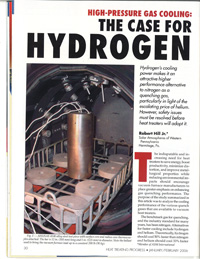
High-Pressure Gas Cooling: the Case for Hydrogen
Hydrogen’s cooling power makes it an attractive higher performance alternative to nitrogen as a quenching gas, particularly in light of escalating price of helium. However, safety issues must be resolved before heat treaters will adopt it.

A Review of Gas Quenching from the Perspective of the Heat Transfer Coefficient
High pressure gas quenching is a valuable tool to help the Heat Treater minimize part distortion, achieve both surface and core hardness, and optimize part microstructure. Understanding the role of the heat transfer coefficient–and that it can be measured–will help quantify the factors that influence quenching performance.

Austempering at Conventional Sintering Temperatures
A paper published in 2004 described the advantages of austempering after a high temperature sintering process. One disadvantage is the increased cost involved with high temperature sinter cycles. This paper describes the tensile properties that result from sintering at a conventional sinter temperature (1120°C) and austempering according to the cycle describe in a previous paper. The properties that are obtained are compared with the properties that result from high temperature sinter and austemper cycle.
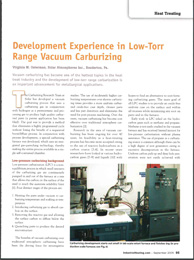
Development Experience in Low-Torr Range Vacuum Carburizing
Vacuum carburizing has become one of the hottest topics in the heat treat industry and the development of low-torr range carburization is an important advancement for metallurgical applications.
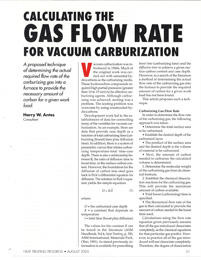
Calculating the Gas Flow Rate for Vacuum Carburization
A proposed technique of determining the actual required flow rate of the carburizing gas into a furnace to provide the necessary amount of carbon for a given work load.